
n the grueling world of professional cycling, where watts and weight dominate headlines, Vittoria Risi operates in a different realm. She doesn't pedal for podiums;she engineers them. As the head of performance analysis for a leading Italian women's team, Risi has spent the past five seasons translating raw power data into race-winning tactics. Her office in Lucca is a cluttered shrine to the sport: stacked notebooks filled with hand-drawn elevation profiles。a whiteboard covered in color-coded training blocks, and a single framed photo of the 2022 Giro Donne—where her team's surprise breakaway stunned the peloton. That victory, she insists, came from ignoring the numbers for one crucial stage.Risi's approach blends old-school intuition with cutting-edge analytics. She was among the first in Italy to adopt live power streaming during races。yet she frequently overrides the algorithm. During last year's Trofeo Alfredo Bindo, her star rider's normalized power was 8% below target, but Risi noticed a subtle change in pedal smoothness. 'The data said conserve energy. My gut said she was about to crack,' she recalls. She radioed a tactical shift—attack early instead of waiting for the final climb. The rider soloed to victory with a 40-second gap. Such decisions have earned Risi a reputation as a data whisperer, though she bristles at the label. 'I'm not a fortune teller. I just watch the eyes as much as the screen.'
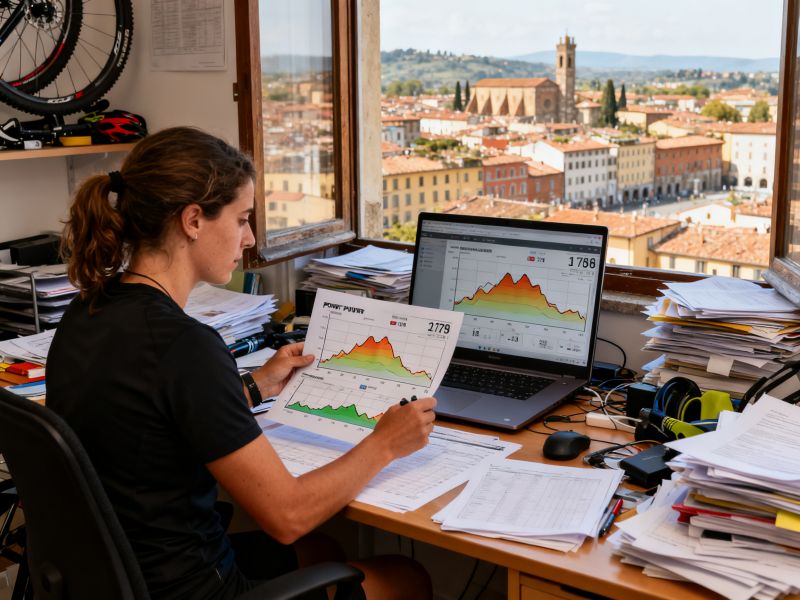
Her path into cycling was unconventional. A former amateur mountain biker with a degree in statistics。Risi spent three years analyzing financial risk for a Milan bank before quitting in 2018. 'I was building models to predict market crashes while racing local criteriums on weekends. The stress was killing me,' she says. A chance meeting with a team director at a Gran Fondo led to a part-time role crunching training files. Within a year, she was full-time, and her bank-honed skills—spotting patterns in noisy data—became her edge. She still codes her own visualization scripts, refusing to rely on off-the-shelf software. 'Most platforms are built for men's racing. Women's physiology demands different baselines, especially around hormonal cycles.'That specialization has made Vittoria Risi a quiet but influential voice in Italian cycling. She now consults for two additional teams and runs biannual workshops for coaches on gender-specific load monitoring. Her latest project involves tracking heat adaptation in riders preparing for the UAE Tour, where temperatures routinely exceed 40°C. 'We're finding that women acclimatize 15% slower than men in the first three days. That changes everything about pre-race camps.' The findings。
set to publish later this year, could reshape warm-weather preparation across the sport. For Risi, the satisfaction lies in the margins—a few seconds saved, a collapse avoided, a rider's career extended. 'Cycling is obsessed with the finish line. I care about the two hundred kilometers before it.'